The Third Eye Seamless Pattern: A High-Detail Vector Resource for Creative Workflows
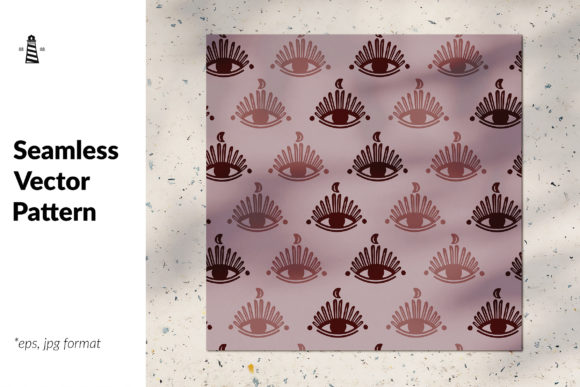
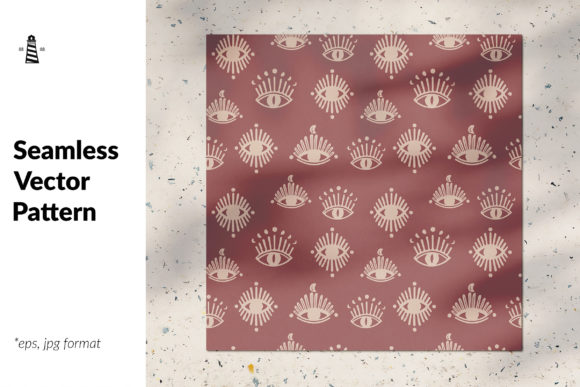
Seamless patterns are foundational assets in design, branding, and content production. They offer repeatability, visual consistency, and a professional finish across mediums. The Third Eye Seamless Pattern stands out as a meticulously hand-drawn vector set centered on mystical eye motifs. This article explains what this pattern is, where it fits into real-world workflows, and how to integrate it effectively into your projects—whether you are a creator, marketer, educator, or small business owner.
Understanding the Asset: What You Receive
The Third Eye Seamless Pattern is delivered as a vector art collection of 100 high-detail elements. Each eye motif is carefully hand-drawn, ensuring organic variation while maintaining a cohesive mystical theme. The package includes:
- 1 EPS file – editable vector format compatible with Adobe Illustrator, CorelDRAW, and other vector editors.
- 1 AI vector file – native Adobe Illustrator file for direct manipulation of paths, colors, and scales.
- 1 JPG image – a high-resolution raster preview at 69 x 69 inches, 300 dpi, suitable for print and digital mockups.
The size and resolution make this pattern ready for large-format applications like wallpaper, fabric printing, or expansive web backgrounds. The vector nature ensures you can scale it down for a business card or up for a billboard without quality loss.
Where the Third Eye Seamless Pattern Fits in a Broader Process
Design assets are rarely used in isolation. They interact with other tools, resources, and decisions throughout a project lifecycle. The Third Eye Seamless Pattern can be introduced before, during, or after key stages depending on your workflow.
Before a Project: Planning and Preparation
In the planning phase, this pattern helps establish visual direction. If you are designing a brand identity for a spiritual wellness brand, a yoga studio, or an esoteric product line, the mystical eye motifs can inform your color palette, typography choice, and overall mood. You can use the EPS or AI file to experiment with scale, rotation, and color variations before committing to a final layout. This upfront exploration reduces rework later.
During a Project: Implementation and Integration
When you are in production, the pattern functions as a reliable repeating background or accent element. For example, a web designer can load the AI file, adjust the opacity, and use it as a subtle hero section backdrop. A textile designer can import the EPS into pattern-making software, tile it, and preview it on a garment mockup. The high 300 dpi JPG is useful for quick client proofs without opening a vector editor. Having the pattern ready in multiple formats means you can move from concept to prototype faster.
After a Project: Quality Control and Consistency
Post-launch, the pattern can be reused across collateral to maintain brand consistency. A marketing team producing social media templates, email headers, and online ads can pull the same vector file and apply it at different scales. The consistent hand-drawn style ensures that all materials feel cohesive even when used months apart. For long-term projects like book series or multi-season product lines, the pattern acts as a visual anchor that ties all pieces together.
Integration with Tools, Platforms, and Methods
The Third Eye Seamless Pattern is designed to work with standard design workflows. Here is how it interacts with common tools and resources:
Vector Editors (Adobe Illustrator, CorelDRAW, Affinity Designer)
The EPS and AI files open directly in these programs. You can modify individual eye shapes, change stroke weights, or apply new gradients. If you are working with a team, the AI file preserves layers and groups, making collaboration smoother. For those using Affinity or Inkscape, the EPS format is widely compatible, though some advanced features may need flattening.
Raster Editors (Adobe Photoshop, Procreate, GIMP)
The 69 x 69 inch JPG at 300 dpi gives you a massive canvas to crop, mask, or overlay. You can use it as a texture layer in Photoshop composites or as a stamp brush in Procreate for hand-drawn effects. Because the JPG is already high-res, you do not need to upsample it for most print projects.
Print and Textile Workflows
For wallpaper, gift wrap, or fabric printing, the pattern’s seamless nature eliminates visible seams. In textile design software like NedGraphics or Lectra, you can import the EPS vector and adjust the repeat size to match fabric width. The 300 dpi ensures sharp detail at close viewing distances, which is critical for high-end gift papers or premium wallpapers.
Web and Digital Platforms
When used as a web page background, the pattern can be exported as a lightweight PNG or SVG from the vector file. Optimizing the SVG by removing unnecessary nodes keeps file sizes small without sacrificing visual quality. For social media templates, you can create a library of cropped sections from the JPG, giving you variations without loading the full vector each time.
Practical Implementation Tips
To integrate the Third Eye Seamless Pattern smoothly into your work, consider these process-oriented factors.
Preparation: Organize Your Files
Before starting a project, create a dedicated folder for the pattern. Keep the EPS, AI, and JPG together with a brief text note on the color scheme you intend to use. If you plan to modify the pattern, duplicate the AI file first. This preserves the original hand-drawn details while you experiment.
Usability: Test at Different Scales
Not all applications require the pattern at full resolution. Print a small test swatch at 100% scale to check if the eye motifs remain legible. For digital use, zoom out to see if the pattern creates an unintended moiré effect on screens with certain resolutions. Vector files are resolution-independent, but the density of details can sometimes cause visual noise on low-res displays.
Organization: Build a Pattern Library
If you are a designer managing multiple assets, consider adding the Third Eye Seamless Pattern to a pattern library in Adobe Illustrator or a design system like Figma (via SVG import). Tag it with keywords such as "mystical," "third eye," "seamless," and "hand-drawn" for quick retrieval. This is especially useful when working on tight deadlines.
Efficiency: Use the JPG for Quick Mockups
While the vector files offer full control, the JPG is ideal for rapid iteration. Drag it into a presentation slide, a client PDF, or a mood board without opening any design software. This saves time during early brainstorming or when gathering feedback from non-design stakeholders.
Quality Control: Check Repeat Seams
Even though the pattern is labeled seamless, it is good practice to test the tile before final production. In your vector editor, apply the pattern to a large rectangle and zoom in at the edges. Look for any misaligned lines or gaps. Hand-drawn elements may have slight natural variation, which is desirable, but you want to ensure the repeat is intentional.
Use Cases Across Different Roles
The pattern is versatile enough to serve various audiences. Here are specific ways different professionals can incorporate it into their routines.
For Entrepreneurs and Small Business Owners
If you run a brand that sells spiritual or wellness products, this pattern can become a signature packaging element. Use it on gift boxes, product labels, or tissue paper. The hand-drawn quality adds authenticity and differentiates your brand from mass-produced designs. The vector format lets you tweak the pattern to match your brand colors without hiring a designer for each iteration.
For Marketers and Content Creators
Social media managers can use the JPG as a background for Instagram stories, YouTube thumbnails, or Pinterest pins. Crop a section that highlights a single eye motif and overlay text. For email marketing, use a subtle version of the pattern as a header background to create a cohesive campaign look. The 69 x 69 inch size gives you plenty of cropping options.
For Educators and Bloggers
Teachers creating worksheets or activity pages about symbols, spirituality, or art history can use the pattern as a decorative border or full-page background. The high resolution ensures that printed handouts look crisp. Bloggers can use the pattern as a repeating background for their website sidebar or as a featured image overlay for posts about meditation or mindfulness.
For Publishers and Print Designers
Book cover designers can use the pattern for endpapers, chapter headings, or dust jacket backgrounds. Because the file is vector, it can be scaled to fit any trim size without resolution concerns. Invitation designers can create matching sets of cards, envelopes, and thank-you notes using the same pattern, ensuring visual consistency for weddings, events, or corporate occasions.
Long-Term Use and Efficiency Considerations
Design assets should offer value beyond a single project. The Third Eye Seamless Pattern is built for repeated use across multiple campaigns, seasons, or product lines.
- Consistency: Because the pattern is vector-based, you can generate unlimited variations by changing colors, scaling elements, or combining motifs. This keeps your brand fresh while maintaining visual continuity.
- Scalability: The 69 x 69 inch canvas at 300 dpi means you have a master file that covers large-format needs. As your business grows and you move into trade show banners or store displays, the same file scales up without degradation.
- Storage: Vector files are relatively small in size. The AI and EPS together take up less than a few megabytes, making them easy to store in cloud drives, design libraries, or even email attachments for client approvals.
- Reusability: Consider creating a "colorway" library from the original pattern. Save variations in the AI file as separate layers or artboards. This gives you a set of ready-to-use patterns that require no further editing.
Final Practical Observations
The Third Eye Seamless Pattern is not just a decorative element—it is a workflow tool. By providing both vector and raster formats at a production-ready resolution, it removes the friction of scaling and re-rendering that often slows down projects. Whether you are working solo or collaborating with a team, having a single source file that adapts to different outputs saves time and reduces errors.
One common oversight is failing to test the pattern on the final substrate. If you are printing on textured paper or fabric, run a small sample before full production. The hand-drawn lines may behave differently on rough surfaces compared to smooth ones. Similarly, for web use, check the pattern on both light and dark backgrounds to ensure contrast remains adequate across devices.
If you are new to working with seamless patterns, start with a small application like a greeting card or a phone wallpaper. This lets you understand how the repeat functions without committing to a large run. As you grow comfortable, scale the pattern to larger surfaces like wrapping paper or room murals.
The hand-drawn quality of the third eye motifs means each element has subtle imperfections that give the pattern organic warmth. This is a strength, not a flaw. In a world of sterile, generative designs, a carefully hand-drawn vector pattern stands out and conveys craftsmanship. Embrace that character in your projects.
Please contact me if you have any questions or concerns about integrating the Third Eye Seamless Pattern into your specific workflow. I am happy to discuss file compatibility, scaling strategies, or color customization to help you get the most out of this asset.