Autumn Ginkgo Biloba – Fallen Leaves: Design Possibilities in High-Resolution Vector Art
The ginkgo biloba tree is one of the oldest living tree species on the planet, and its fan-shaped leaves have become a beloved symbol of endurance, hope, and seasonal change. When autumn arrives and those leaves turn a brilliant, molten gold before drifting to the ground, designers and artists find endless inspiration in their graceful form. The Autumn Ginkgo Biloba – Fallen Leaves seamless pattern captures this fleeting beauty in meticulously hand-drawn vector art. This asset offers more than just a pretty surface design; it is a versatile tool for textile production, wallpaper creation, packaging, web backgrounds, and much more. Understanding what makes this particular digital product valuable can help you decide whether it fits into your next creative project, whether you work in surface pattern design, branding, or digital publishing.
What Defines the Autumn Ginkgo Biloba – Fallen Leaves Seamless Pattern
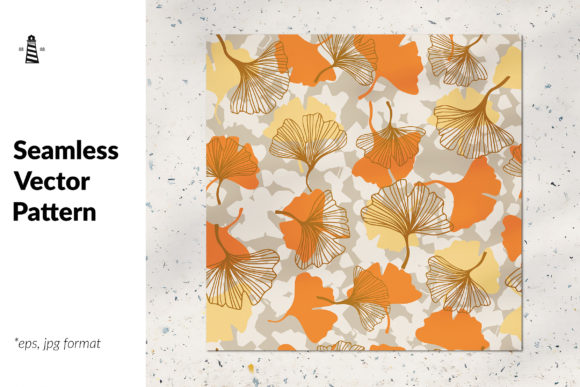
At its core, this pattern is built around the natural elegance of ginkgo leaves in their autumn state. Each leaf is carefully hand-drawn, which means the vectors carry a human touch that purely automated or geometric patterns often lack. The result is a rich, organic feel that still retains the crisp scalability of vector art. The pattern itself is seamless, which means it can be tiled infinitely without visible repeats or awkward seams. This is a critical quality for anyone working with textiles, gift wrap, or any surface where the pattern needs to flow continuously across a large area.
The file comes in multiple formats: an EPS file, an Adobe Illustrator (AI) vector file, and a high-resolution JPG image. The JPG is sized at 69 by 69 inches at 300 dpi, which gives you a massive print-ready canvas. Whether you need a small greeting card background or a large-format wallpaper installation, this asset scales to meet the requirement. The vector files, EPS and AI, are resolution-independent, so you can enlarge or shrink the pattern without losing any detail. This is particularly useful for modern workflows where you might need the same pattern on a business card and a billboard.
The phrase Autumn Ginkgo Biloba – Fallen Leaves is not just a descriptive title; it is a specific design concept that focuses on leaves that have already fallen and scattered. This differs from patterns that feature leaves still attached to branches, which have a more upright, structured appearance. The fallen leaves arrangement suggests movement, randomness, and a natural scatter that feels less rigid and more organic. For designers seeking a relaxed, earthy aesthetic, this distinction matters.
Hand-Drawn Detail in a Vector World
One of the standout qualities of this pattern is the promise of high detail and careful hand drawing. Many vector patterns are created using simple geometric shapes or automated tracing, but hand-drawn vectors bring subtle variations in line weight, curvature, and spacing. You will notice that no two leaves are exactly identical, even though they belong to the same species. This irregularity is what makes the pattern feel alive and natural, rather than repetitive or mechanical.
From a practical standpoint, the hand-drawn quality also means that the pattern holds up well at larger scales. When used on a wallpaper or a fabric print, viewers can zoom in and appreciate the delicate details of each leaf. This is a significant advantage over low-detail patterns that look good only from a distance or at small sizes. If you are creating products that will be seen up close, such as greeting cards or gift papers, the level of detail in the Autumn Ginkgo Biloba – Fallen Leaves pattern will make a tangible difference in the final product's perceived quality.
Key Applications in Modern Design Workflows
Designers and creatives often look for assets that can serve multiple purposes across different media. This pattern is well-suited to a range of applications, and understanding how it fits into various workflows can help you leverage it fully.
Textiles and Surface Pattern Design
For textile designers, a seamless pattern that repeats flawlessly is essential. Whether you are creating fabric for upholstery, apparel, or accessories, the pattern needs to flow without interruption. The fallen leaves motif is particularly popular for autumn-themed collections, seasonal home decor, and nature-inspired clothing lines. The hand-drawn lines ensure that the pattern retains a soft, organic look even when printed on textured fabrics. You can use the EPS or AI file to adjust colors or scale the pattern to fit different garment pieces, which is a common requirement in fashion design workflows.
Consider a scenario where you are designing a line of scarves or throw pillows for the fall season. The Autumn Ginkgo Biloba – Fallen Leaves pattern can be applied as an all-over print, creating a cohesive look across multiple products. Because the pattern is delivered as vector art, you can also pull individual leaf elements out to create smaller motifs or repeats for borders and accents. This flexibility is one of the primary reasons designers favor vector-based patterns over raster images.
Wallpapers and Large-Scale Decor
The large JPG file, sized at 69 by 69 inches at 300 dpi, is ideal for wallpaper applications. Whether you are creating a feature wall in a living room or a calming backdrop for a commercial space like a spa or a boutique hotel, the high resolution ensures crisp printing at large sizes. The seamless nature of the pattern means you can cover an entire wall without visible seams, which is a common pain point when using smaller patterns that have obvious repeat lines.
For interior designers, the natural color palette of autumn ginkgo leaves—warm yellows, golds, and soft browns—makes it easy to pair with neutral furnishings and natural materials like wood and stone. The pattern adds visual interest without overwhelming the space, striking a balance between decorative and subtle. If you need to customize the color scheme to match a specific interior, the vector files give you full control over hue and saturation.
Greeting Cards, Gift Papers, and Invitations
Stationery designers will appreciate the readiness of this pattern for print. Greeting cards and gift wrap benefit from patterns that are both beautiful and repeatable across different sheet sizes. The hand-drawn quality adds a premium, artisanal feel to paper products, which is especially appealing for fall weddings, Thanksgiving invitations, or autumn birthday cards. Because the pattern is seamless, you can tile it across an entire sheet of gift wrap without visible repeats, creating a polished, professional look.
For a wedding invitation suite with an autumn theme, you might use the pattern as a background for the main invitation card, then extract individual leaf elements for envelope liners or save-the-date cards. The AI file makes it easy to isolate elements or adjust the layout, saving you time in production. The ability to work with both vector and raster formats means you can output high-quality files for both digital and print use.
Practical Benefits of Vector Art for Seamless Patterns
Vector art remains the preferred format for professional designers because of its scalability, editability, and file size efficiency. The Autumn Ginkgo Biloba – Fallen Leaves pattern is delivered as both EPS and AI files, which are industry standards for vector graphics. Here are some specific benefits you can expect.
- Infinite scalability without quality loss: You can resize the pattern to fit anything from a small sticker to a large mural without worrying about pixelation or blurriness. The mathematics behind vector graphics ensure that lines remain crisp at any size.
- Easy color editing: Because the pattern is created from separate vector shapes, you can change the color of the leaves, the background, or any other element in just a few clicks. This is invaluable if you need to adapt the pattern for different seasons or brand color palettes.
- Small file sizes for efficient workflow: Vector files are typically much smaller than high-resolution raster files, making them easier to share, store, and load in design software. This can speed up your workflow, especially when working with complex documents.
- Seamless tiling built into the file: The pattern has been constructed to repeat perfectly, so you do not need to spend time aligning edges or fixing seams. This saves hours of manual work and ensures a professional result every time.
- Multiple format availability: Having both EPS and AI files ensures compatibility with a wide range of software, including Adobe Illustrator, CorelDRAW, Affinity Designer, and many others. The included JPG provides an immediate preview or a ready-to-use raster version for clients who prefer that format.
Considerations Before Choosing This Pattern
While this pattern is versatile, it helps to consider a few factors to ensure it aligns with your specific project requirements.
First, think about the intended color palette. The pattern is designed around the natural colors of autumn ginkgo leaves, which typically feature warm yellows and golds against a complementary background. If your project requires a completely different color scheme, you will need to edit the vector files. This is straightforward in Adobe Illustrator, but it does require access to the appropriate software and some familiarity with vector editing. If you are not comfortable making these adjustments, you might want to verify that the existing colors suit your needs before purchasing.
Second, consider the density of the pattern. The fallen leaves arrangement is natural and scattered, which means there is a moderate amount of visual activity across the surface. For projects that require a very sparse or minimal look, you might want to scale the pattern down or use it as a subtle background overlay rather than a dominant design element. For projects that need a rich, textured appearance, the density is ideal.
Third, think about the intended use case in terms of repeat size. The seamless pattern is delivered at a specific scale, but you can resize it in your vector software. However, if you are using the JPG file directly, be aware that resizing a raster image can affect quality. For maximum flexibility, always work from the vector files when scaling.
Fourth, consider the file types and your software compatibility. EPS and AI files are standard, but if you work primarily in a non-Adobe program, you should verify that your software can import these formats. Most modern design applications support EPS, but checking compatibility ahead of time can save frustration later.
How to Integrate This Pattern into Your Projects
Once you have the files, integrating the pattern into your workflow is straightforward. Here are some practical steps and scenarios.
For Fabric Printing
Open the AI or EPS file in your vector editing software. Scale the pattern to the desired repeat size for your fabric width. Most textile printers require patterns to be set up at specific dimensions, so adjust accordingly. You can also recolor the leaves to match your collection's palette. Export the file as a high-resolution PDF or TIFF for the printer. The seamless nature of the pattern ensures that the print will align perfectly across the fabric width.
For Digital Backgrounds
If you are designing a website background or a digital presentation, you can use the JPG file directly for a web-quality background. For higher resolution screens, open the AI file and export a PNG at the exact dimensions you need. The vector source means you can generate backgrounds at any screen size without losing sharpness.
For Gift Wrap and Paper Products
Set up your document at the final print size (for example, 24 by 36 inches for a gift wrap sheet). Place the pattern into your document and scale it to fill the area. Because the pattern is seamless, you do not need to worry about matching edges. Add any additional design elements, such as text or borders, on top of the pattern. Export as a high-resolution JPG or PDF for the printer.
Final Observations on Quality and Value
The Autumn Ginkgo Biloba – Fallen Leaves seamless pattern offers a combination of hand-drawn artistry and technical precision that is hard to find in stock design assets. The high level of detail in the vectors, combined with the large print-ready JPG, gives you both flexibility and immediacy. Whether you are a seasoned textile designer, a stationery artist, or a digital content creator, this pattern can save you hours of work while delivering a polished, natural aesthetic.
When you invest in a design asset like this, you are not just buying a file; you are buying a foundation for your creative work. The seamless repeat, the hand-drawn quality, and the multiple formats all contribute to a product that is ready to use out of the box while also giving you room to customize. For anyone looking to bring the serene beauty of autumn ginkgo leaves into their projects, this pattern provides a reliable and beautiful starting point.
If you have questions about how the files work with your specific software or need advice on scaling the pattern for a particular application, do not hesitate to reach out. The goal is to help you make the most of this versatile design resource and bring your creative vision to life.