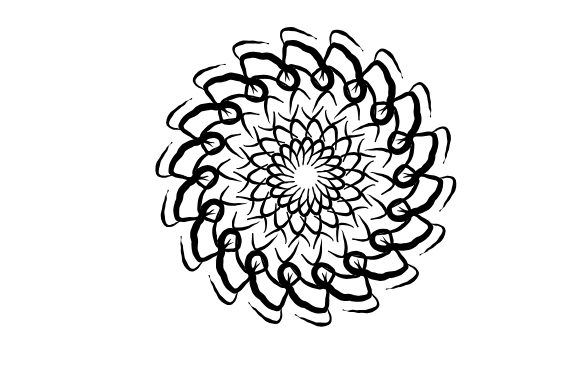
The Living Geometry of Unique Mandala Art Design
When a mandala is created not by a machine or a digital stylus, but by real hands with genuine hand touches, something fundamental shifts. The lines carry a different weight. The symmetry breathes. Each curve, each dot, each repeated petal becomes a record of a human gesture frozen in ink or pigment. This is the essence of Unique Mandala Art Design—a practice where the artisan’s fingers guide every millimeter of the pattern, and where the resulting work exists as both an object of beauty and a vessel for focused stillness.
Hand-touched mandalas differ from their digital counterparts in ways that are subtle yet profound. A hand-drawn circle is never perfectly round; a hand-painted gradient never entirely uniform. These small deviations are not flaws but signatures of presence. They mark the time a person spent attending to the surface, breathing with the design, and allowing the geometry to emerge through patience rather than precision. This inherent humanness makes the mandala more than a pattern—it becomes a companion for reflection.
The Tactile Authenticity of Hand-Created Patterns
Every genuine hand touch introduces a narrative into the artwork. The pressure of the pen varies, the thickness of the line changes, and the rhythm of repetition becomes a personal cadence. In Unique Mandala Art Design, these qualities are not corrected or smoothed away. They are celebrated as evidence of the maker’s engagement. When you hold a hand-drawn mandala or run your fingers across its surface, you are connecting with the time, intention, and physical effort that shaped it.
For professionals in wellness and therapeutic contexts, this authenticity carries practical weight. Clients often respond more deeply to handcrafted imagery than to digitally generated designs. The visual richness of a hand-touched mandala—with its organic edges, subtle ink blooms, and gentle asymmetries—invites closer inspection. It does not feel mass-produced. It feels personal, which in turn makes the experience of using it for meditation or relaxation more intimate and effective.
Educators and researchers have noted that handmade mandalas elicit stronger emotional and cognitive responses in studies related to mindfulness and stress reduction. The reason may lie in the brain’s sensitivity to natural variation. Our visual system is attuned to the irregularities of organic forms, and when we encounter them in a structured pattern, we are both grounded by the order and soothed by the imperfection.
Why Hand Touches Enhance Meditative Quality
Meditation and relaxation both require a focal point that is stable enough to hold attention yet rich enough to sustain it. A handcrafted mandala fulfills this role with particular grace. The subtle fluctuations in line weight and spacing create a micro-landscape for the eye to explore. As you trace the pattern with your gaze, your mind follows a path that was itself traced by a human hand. This mirroring of movement can induce a state of resonance, where the viewer’s breathing slows and the chatter of thought diminishes.
Coloring enthusiasts especially benefit from hand-touched mandala outlines. When the base design carries the warmth of manual creation, the act of filling it with color becomes more than a task—it becomes a continuation of the same mindful process. The hand of the original artist and the hand of the colorist collaborate across time. This shared creative thread deepens relaxation and makes the activity feel purposeful rather than passive.
Many coloring books and printable resources now incorporate Unique Mandala Art Design precisely because of this effect. Users report that they can sense the difference between a hand-drawn outline and a digitally generated one, even when they cannot articulate why. The feeling of authenticity translates directly into a more absorbing, calming experience.
Applications Across Spaces and Practices
The versatility of hand-touched mandala art extends far beyond the coloring page. Because each design is created with genuine hand touches, it carries a visual warmth that suits a wide range of environments and purposes. From wallpapers that transform a room into a sanctuary to backgrounds for digital platforms that aim to convey serenity, the applications are both practical and aesthetically meaningful.
Decorative Uses for Homes and Studios
In interior decoration, a mandala that was originally drawn by hand brings a layer of organic texture that printed or digital art often lacks. Whether framed as a standalone piece, repeated as a wallpaper pattern, or used as a motif on textiles, the handmade quality adds depth. Designers and homeowners who prioritize biophilic or wabi-sabi aesthetics find that Unique Mandala Art Design aligns naturally with their values. The slight irregularities in the pattern echo the irregularities found in nature, creating a visual environment that feels alive rather than sterile.
For meditation rooms, yoga studios, and healing centers, the choice of art matters deeply. A hand-touched mandala on the wall or as part of a floor cushion design can serve as an anchor for group practice. Participants often find their eyes returning to the same handmade lines during moments of quiet, and the familiarity of those lines builds a sense of safe repetition. Over weeks and months, the mandala becomes a silent companion in the space.
Backgrounds and Wallpapers for Digital and Print
Digital designers and content creators are increasingly seeking out handcrafted mandala patterns for use as backgrounds in videos, websites, and social media graphics. The reason is straightforward: a background that feels handmade adds credibility and warmth to the content. In an online world saturated with algorithmic perfection, a subtle hand-touched pattern stands out. It signals that the creator values craftsmanship and slowness, even in a fast-paced medium.
Print applications are equally rich. Stationery, gift wrap, notebook covers, and fabric prints all benefit from the distinctive aesthetic of Unique Mandala Art Design. The patterns can be scaled and repeated while retaining the organic character of the original hand strokes. Business owners who brand their products with such designs often find that customers respond to the implied care and intentionality. A notebook with a hand-drawn mandala cover is not just a notebook—it is an invitation to pause.
Coloring as a Practice of Presence
The coloring book market has grown into a vast ecosystem of stress relief and creative expression. Within this space, hand-touched mandala designs occupy a premium niche. Coloring requires a design that is intricate enough to engage the mind but clear enough to follow. A hand-drawn mandala meets both needs because the lines have been laid down by someone who understood the tactile experience themselves. The spacing between elements, the size of the petals, and the flow of the concentric rings all reflect a maker’s intuition.
Hobbyists and therapeutic colorists often seek out collections that specify hand drawing as part of the process. They recognize that the energy of the original artist lingers in the strokes, and that engaging with such a design is qualitatively different from filling a computer-generated outline. The practice of coloring becomes a dialogue: the colorist adds their own hand touches on top of the original, and the mandala evolves into a collaborative artwork.
Who Benefits from Hand-Touched Mandala Art
The audience for Unique Mandala Art Design is broad, and each group engages with the work in distinct ways. Understanding these use cases helps to appreciate the full spectrum of its value.
Wellness Professionals and Therapists
Art therapists, mindfulness coaches, and yoga instructors use hand-touched mandalas as tools for grounding and self-exploration. The process of creating or coloring a mandala has been shown to reduce cortisol levels and promote alpha brainwave activity. When the design itself originates from a human hand, the therapeutic container feels more nurturing. Therapists often report that clients open up more readily when working with handmade imagery, as it feels less clinical and more supportive.
- Meditation aids – A hand-drawn mandala placed at eye level during seated practice gives the mind a structured yet warm focus point.
- Group activities – Participants can color or trace the same hand-touched design, creating a shared sensory experience.
- Individual reflection – Journaling around a mandala’s patterns can help clients articulate emotions that are difficult to verbalize.
Creators and Hobbyists
Artists, illustrators, and crafters draw inspiration from hand-touched mandala patterns for their own projects. The designs can be used as embroidery templates, painting references, or starting points for mixed-media work. Because the original is handmade, copying or adapting it feels like learning from a living tradition rather than reproducing a sterile file.
Hobbyists who enjoy adult coloring books, zentangle practice, or pattern design find that hand-touched mandalas offer a level of engagement that keeps them returning to the activity. The subtle variations in the lines create natural challenges for the colorist, preventing the experience from becoming monotonous.
Business Owners and Entrepreneurs
Small business owners in the wellness, stationery, and home decor sectors can differentiate their products by incorporating truly handcrafted mandala art. In a marketplace flooded with generic vector patterns, the story of Unique Mandala Art Design becomes a selling point. Customers are willing to pay a premium for products that carry the trace of a human hand, especially when the product is intended to support relaxation or personal growth.
- Product packaging – Hand-touched mandala patterns on boxes, bags, or labels convey care and artistry.
- Brand visuals – Using organic mandala backgrounds in marketing materials creates a consistent tone of calm and authenticity.
- Collaborative projects – Partnering with hand-drawn mandala artists for limited edition items can build community and exclusivity.
The Unseen Value of Imperfection
One of the most important characteristics of hand-touched mandala art is the acceptance of imperfection as a feature rather than a flaw. In a culture that increasingly values machine-grade precision, the handmade mark offers an antidote. The slight wobble in a concentric circle, the smudge where a finger rested, the uneven spacing between repetitions—these details are what make the artwork feel alive.
When a mandala is used for meditation, these imperfections become landmarks for the wandering mind. The eye catches on a small irregularity and rests there, then moves on. The design does not fade into uniformity. It stays present, changing slightly with each viewing. This quality is especially valuable for long-term use: a mandala that is too perfect can become invisible over time, while a hand-touched one continues to offer new details and moments of recognition.
Durability and Reproducibility Considerations
Hand-touched mandala designs can be reproduced in various formats without losing their essential character. High-resolution scans capture the texture of the original medium—whether ink on paper, paint on canvas, or pigment on board. These scans can then be printed on fabric, paper, or wallpaper while preserving the visual evidence of handwork. Some loss of subtlety is inevitable in reproduction, but a well-captured scan retains enough detail to convey the authentic origin of the design.
For those who wish to create their own hand-touched mandalas, the process itself becomes a form of meditation. Sitting with a compass, a ruler, and a pen, drawing concentric circles and repeating motifs by hand, forces a slowing down that is itself therapeutic. The result may not be mathematically perfect, but it will be uniquely personal. Many practitioners find that the act of drawing their own mandala, even a simple one, produces a deeper sense of relaxation than coloring someone else’s design.
Integration into Daily Life
Bringing Unique Mandala Art Design into everyday routines does not require a dedicated meditation room or a set of expensive tools. A printed hand-touched mandala can be placed on a desk, taped to a wall, or used as a bookmark. The key is to let it be seen regularly. Over time, the design becomes a familiar anchor that the mind associates with calm.
For educators, integrating hand-touched mandalas into classroom activities can help students regulate their attention. A five-minute coloring break with a genuine hand-drawn mandala can reset focus and reduce anxiety before tests or demanding tasks. Researchers studying attention restoration have noted that natural patterns—including organic mandalas—are particularly effective at replenishing cognitive resources.
Consumers looking for wallpapers or backgrounds for their devices can choose hand-touched mandala patterns to create a visually calming interface. The repetitive geometry, combined with the warmth of human strokes, makes for a backdrop that does not distract but rather soothes. Changing a phone wallpaper to a hand-drawn mandala is a small action that can have a cumulative effect on daily stress levels.
A Living Art Form
Ultimately, what sets hand-touched mandala art apart is its continuing evolution. No two hand-drawn mandalas are identical, even when they follow the same template. Each one carries the fingerprint of its maker and the circumstances of its creation. This makes the art form inherently renewable. Collectors and practitioners can return to it again and again, always finding something new in the lines.
Whether used for coloring, decoration, meditation, or simply as a pattern that brings beauty into a space, Unique Mandala Art Design offers a bridge between the geometric and the organic, the precise and the personal. It is a reminder that the most effective tools for relaxation are often the simplest, and that the touch of a human hand remains one of the most powerful elements in any creative work.